
How to Get More Webinar Registrations: Psychology and Data

Webinars have come a long way. What began as basic online presentations has turned into powerful lead generation tools, changing the way businesses connect with their audiences. But what actually makes someone click "register" for a webinar?
While businesses try to create the next "must-attend" online event, the real secret lies in understanding the human mind behind every registration click.
This article is part of our 2026 research on webinars, based on analysis of 1M+ webinar registrants and insights from 524 B2B marketers.
If you want the complete set of 60 webinar statistics, check out the full report.
This page focuses specifically on one key question: When, how and why people sign up for webinars.
The Hidden Psychology of "I'll Register for That"
The Value-Exchange Mindset
People aren't just busy, they're strategic about their time. When someone considers registering for your webinar, they're conducting a mental cost-benefit analysis that happens in seconds. They're asking themselves: "What will I gain that I can't get anywhere else?"
This is where traditional marketing falls short. People can smell a sales pitch from their inbox preview. But webinars that offer real value? Those break through the noise because they appeal to our fundamental desire for growth and improvement.
The most successful webinar titles don't talk about features — they talk about outcomes. Instead of "Product Demo: New CRM Dashboard," try "How to cut your sales follow-up time by 40% in 30 days." Same content, completely different psychological appeal.
This is exactly why platforms like Contrast focus not just on hosting webinars, but on optimizing the entire registration journey from landing page messaging to post-event content repurposing, to align with how people actually make decisions.
The Social Identity Connection
People don't just attend webinars for information — they attend to reinforce their professional identity. A marketing manager registers for "Advanced SEO Strategies" not just to learn about keywords, but to maintain their identity as someone who stays updated with industry trends.
This social identity theory explains why 91% of B2B professionals prefer webinars over other content types. Webinars allow them to actively participate in their professional community, ask questions that demonstrate their expertise, and connect with peers who share their challenges.
The FOMO Factor in Professional Development
Fear of Missing Out isn't just about social events — it's a powerful driver in professional contexts too. When someone sees a webinar titled "The marketing strategy that increased our revenue by 300%," they're not just curious about the tactics. They're afraid their competitors might gain an advantage they don't have.
This fear gets even stronger when something feels limited. Limited seats, exclusive content, or one-time presentations tap into our fear of being left behind. It's why 14% of webinar registrations happen on the day of the event — that last-minute urgency often comes from not wanting to miss out. (Source: Contrast Webinar Stats Report 2026)
While psychology explains why people register, webinar platforms determine whether that intent translates into actual sign-ups. Elements like registration friction, page load speed, calendar integration, and reminder automation all quietly shape conversion rates often as much as the messaging itself.

Want to Run Better Webinars?
Get a personalized demo and see how Contrast can elevate your webinars
Book your demoThe Psychology of Timing
What Makes Tuesday the Sweet Spot for Webinar Registration
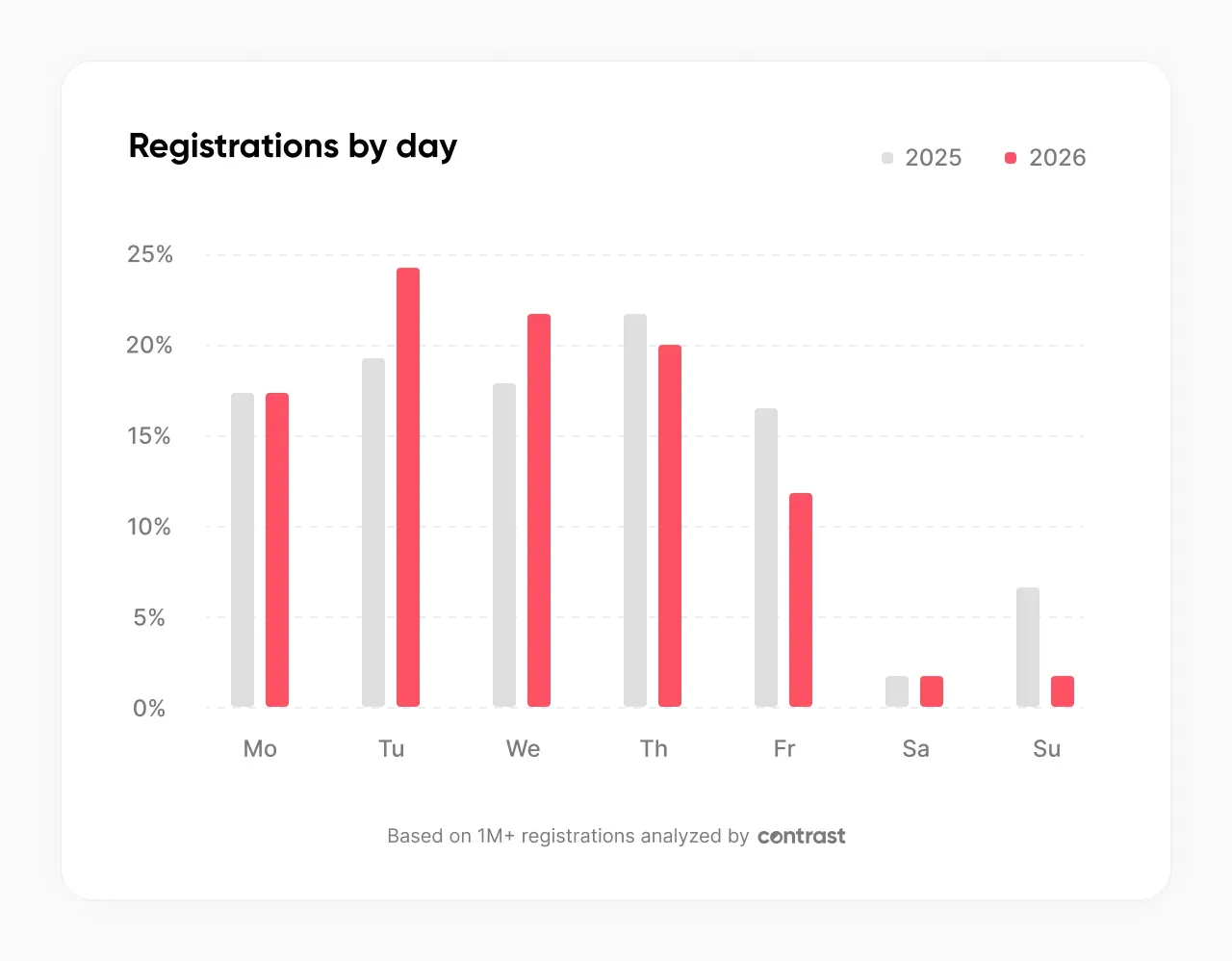
Tuesday captures 24% of all webinar registrations (Source: Contrast Webinar Stats Report 2026), but the psychology behind this goes deeper than simple scheduling convenience. Tuesday represents the sweet spot in our weekly mental rhythm.
Tuesday exists in what psychologists often describe as a "cognitive momentum window" in the weekly cycle. After the transition out of Monday’s reset, people tend to be fully re-engaged in work mode, but not yet experiencing the midweek fatigue that can reduce attention and motivation. This creates a balance of clarity and forward momentum: we’re organized, planning-oriented, and more open to committing to future learning. It also aligns with a "goal-setting mindset," where the week feels structured enough to plan ahead, but still flexible enough to add new commitments. As a result, Tuesday supports higher intent decisions, because people can more easily visualize integrating new learning into an already active but not overloaded week.
The 60-Minute Commitment Sweet Spot
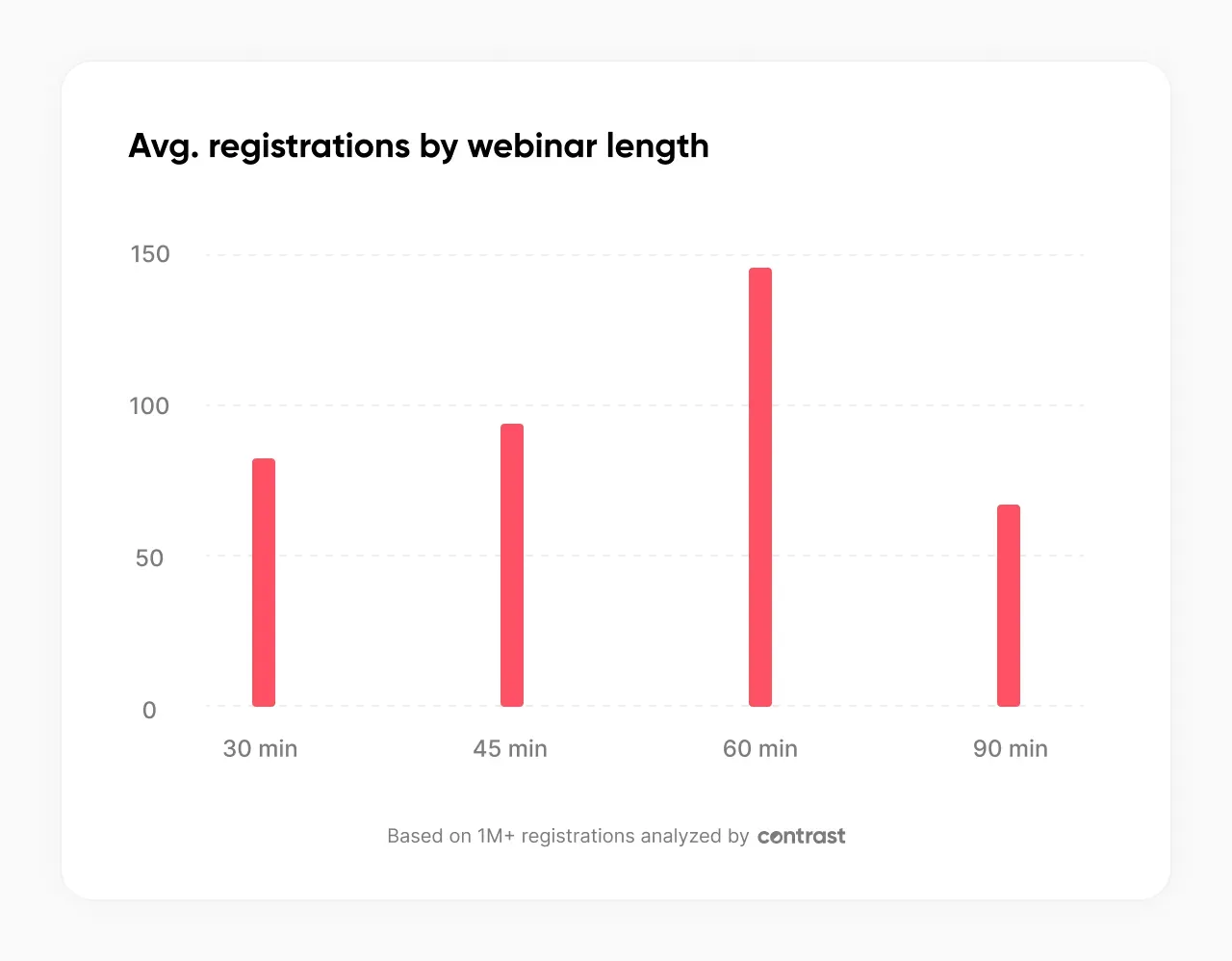
Why do 60-minute webinars generate the highest registration rates?
60 minutes occupies the psychological space where effort justification works in our favor. We value things more when we invest meaningful effort into them, but only up to a point. Too little effort (30 minutes) and we don't value the outcome; too much effort (90+ minutes) and we begin to question whether the investment is worth it.
60 minutes represents the optimal effort investment where our brains can justify the commitment without triggering avoidance behaviors. It's substantial enough that we'll value what we learn, but not so demanding that we'll procrastinate on the decision itself.
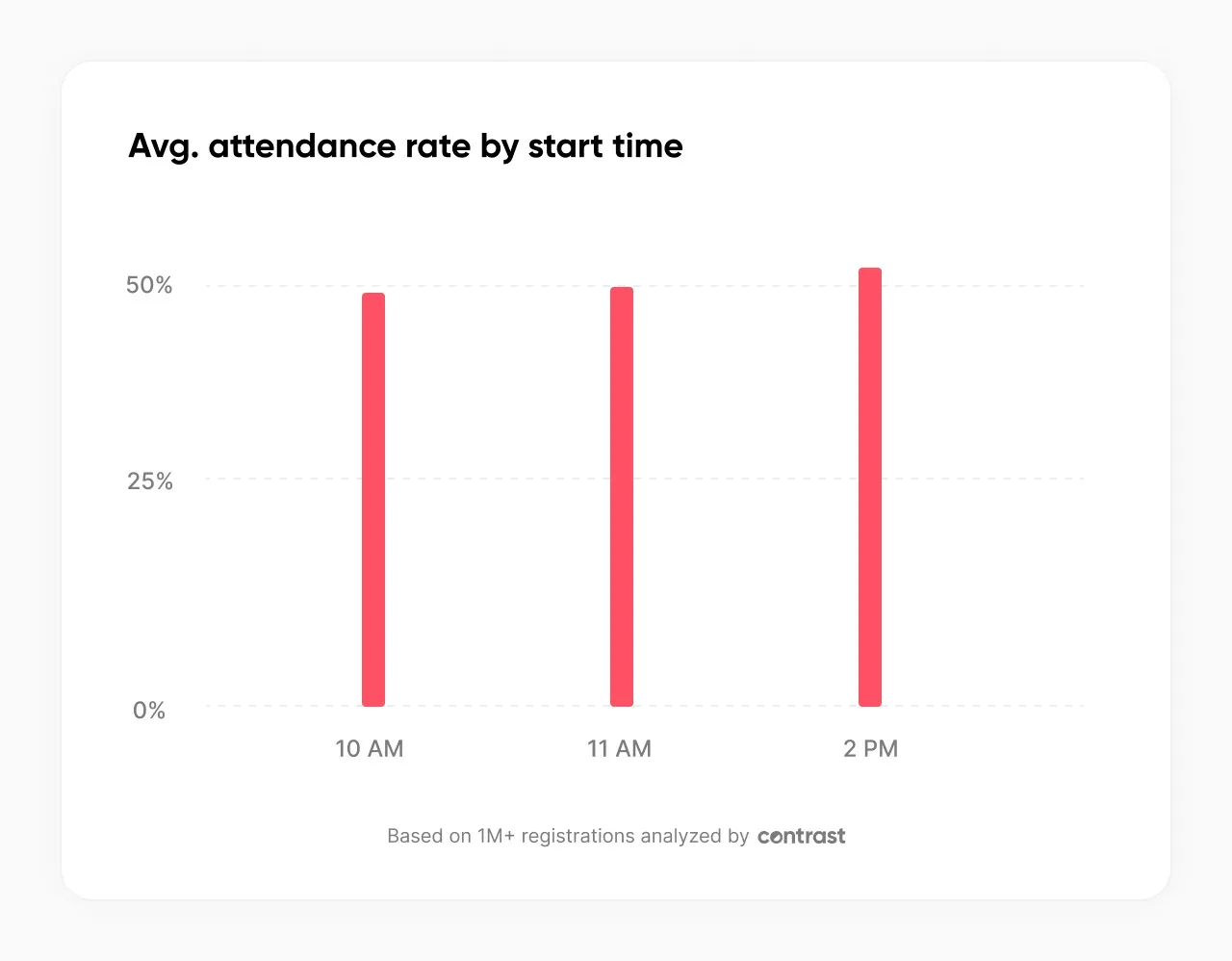
Why Webinars at 2PM and 11AM have the highest average attendance rates (55% and 50%)
Most 2PM webinars are scheduled in CET, which translates to 8AM EST, giving American audiences a chance to join during their morning hours.
Conversely, 11AM EST webinars work perfectly for European participants who can attend at 5PM CET, right at the end of their workday.
There's a psychological difference between how we experience time at different points in our day, which affects not just our ability to focus but our willingness to engage with new ideas.
For Europeans attending at 2PM, the webinar represents a mid-day investment in professional development. This timing aligns with what psychologists call "agentic behavior" taking control of one's professional growth during prime working hours.
For Americans joining at 8AM, the webinar becomes part of their morning ritual of preparation and goal-setting. Morning learning taps into what behavioral scientists call "implementation intention"— the psychological state where we're most receptive to information that will shape our day's priorities.
How User Experience Drives Decision-Making
Desktop vs Mobile Registration
78% of registrations happen on desktop (Source: Contrast Webinar Stats Report 2026), which tells us something important about the decision-making context. People typically discover webinars during their work hours, when they're already in a professional mindset and have access to their primary work tools.
Meanwhile, mobile registrations tap into "capture behavior"— the psychological drive to immediately act on opportunities before they disappear. Mobile users are often in transition states (commuting, waiting, between meetings), where the fear of forgetting or losing the opportunity creates urgency. This urgency can actually increase the psychological value of the webinar, as our brains interpret the immediate action as evidence of the opportunity's importance.
So, even though most people sign up on desktop, 22% are registering through their phones. That’s a big enough chunk to make sure your registration page works well on both mobile and desktop.
The Familiarity Bias in Registration
77% of people choose email registration over single sign-on options (Source: Contrast Webinar Stats Report 2026). This preference shows the power of familiarity bias in decision-making. When faced with multiple options, people default to what feels most familiar and controllable.
Single sign-on, despite its convenience, triggers delegation anxiety. Even though it's faster, it requires us to trust that external systems will work properly, remember our credentials, and maintain our privacy. This creates cognitive dissonance — the discomfort of wanting convenience while needing control.
And also, email registration doesn't require remembering which SSO provider you used or dealing with potential authentication failures. It's the psychological equivalent of taking the well-worn path — safe, predictable, and comfortable.
The Authority Halo Effect
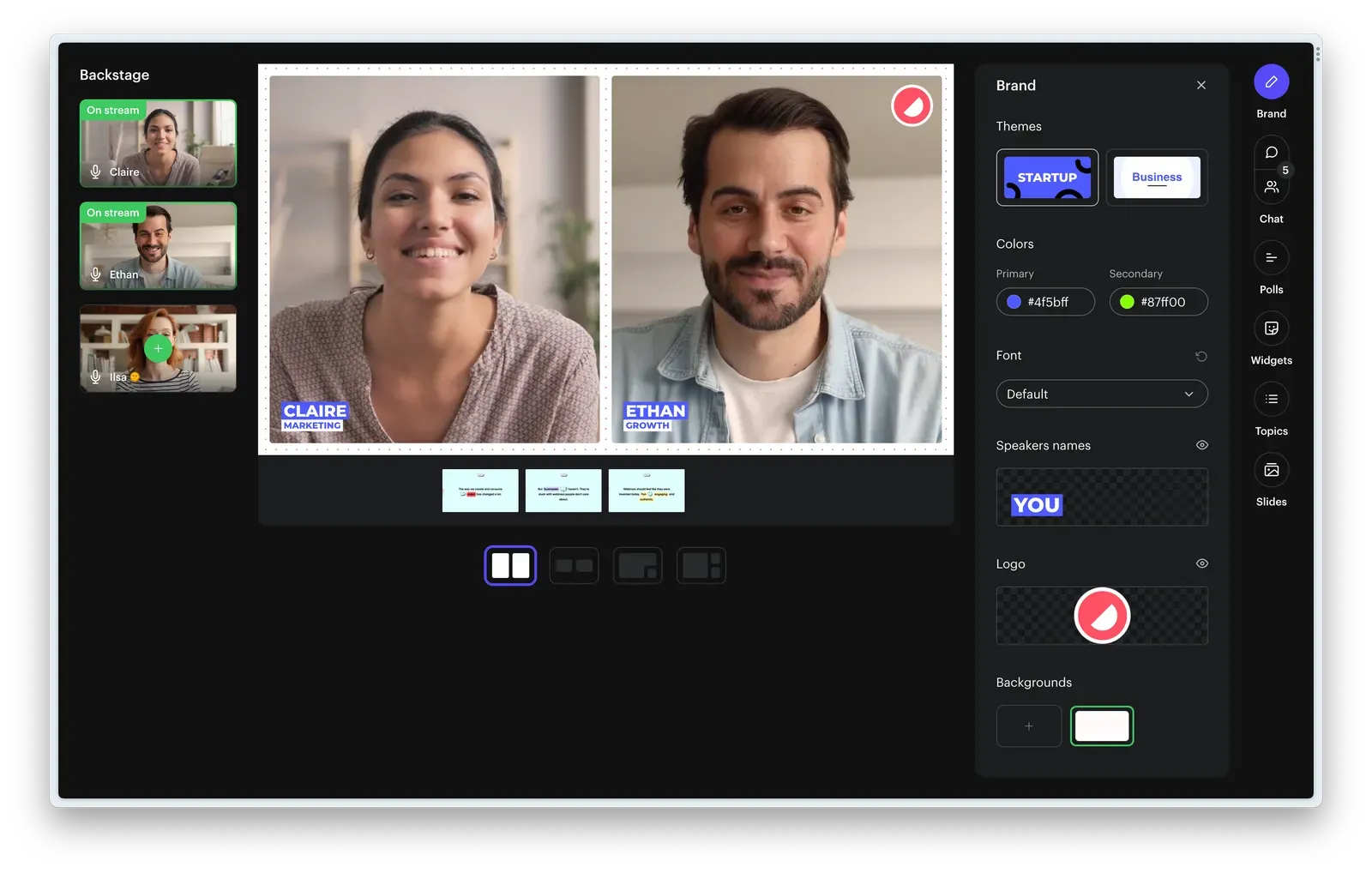
90% of marketers apply custom branding to their webinars (Source: Contrast Webinar Stats Report 2026), and this isn't just about aesthetics. Professional branding creates a halo effect. When your webinar looks polished and branded, attendees automatically assume higher content quality.
This psychological shortcut helps people justify their registration decision. When we see professional branding, our brains automatically calculate that significant resources were invested in creating this experience. This investment signal becomes a form of social proof — if they've invested this much in a webinar, they must be confident in their content.
The Content Psychology: What Makes People Click "Register"
The Anti-Sales Bias
78% of people won't register for webinars that appear overly promotional (Source: Contrast Webinar Stats Report 2026). People have naturally developed filters for detecting sales content. The moment your webinar feels like a pitch, you've triggered their skepticism defenses.
Educational positioning, conversely, triggers gift psychology. When content is framed as knowledge sharing rather than selling, our brains process it through completely different ways.
This educational framing also taps into reciprocity anticipation. It's when someone offers to teach us something valuable, we automatically begin calculating how we might reciprocate. This reciprocity mindset actually makes us more likely to engage with their offers, but only after we received value from them.
The Interactive Expectation
92% of webinar attendees expect live Q&A sessions (Source: Contrast Webinar Stats Report 2026). This expectation reveals how audience psychology has evolved. Passive consumption isn't enough anymore — people want to engage, contribute, and have their specific questions addressed.
This shift from consumption to participation changes the entire value proposition. Your webinar isn't just competing with other content, it's competing with the promise of personal attention and customized insights.
Live Q&A creates psychological co-presence— the sense that we're sharing intellectual space with both the presenter and other participants, which increases engagement and retention.
Q&A on stage with Contrast
Understanding Your Audience's Identity
Before crafting your webinar, ask yourself: What professional identity does your audience maintain? Are they marketers who need to stay ahead of trends? Sales people who need practical solutions? Leaders who need strategic insights?
Your webinar should reinforce and elevate that identity. When someone registers, it shouldn’t just feel like signing up for another session — it should feel like a decision that confirms their self-image and moves them closer to who they want to become.
The Psychology Behind Successful Webinar Registration Campaigns
Build your registration campaign like a psychological journey:
- Awareness: Introduce the problem or opportunity
- Interest: Share insights that demonstrate your expertise
- Desire: Paint a picture of the transformation you're offering
- Action: Make registration feel like the obvious next step
Conclusion
Psychology drives everything.
The most successful webinar marketers understand that behind every registration is a human being making a complex psychological decision. They're weighing value against time, risk against reward, and current needs against future aspirations.
When you align your webinar strategy with these psychological realities — when you understand the identity your audience maintains, the fears they want to overcome, and the transformation they're seeking — registration becomes the natural result of real connection.
The data shows what works, but psychology explains why it works. Use these insights not just to boost your registration numbers, but to create webinars that serve your audience and move them forward in their professional journey.
Frequently asked questions (FAQs)
How do I get more registrations for my webinar?
The biggest driver of webinar registrations is perceived value. People quickly assess whether the knowledge or outcome you're offering is worth their time. Outcome-focused titles, clear speaker credentials, and specific takeaways consistently outperform vague or sales-heavy positioning. For the full registration data — including which days, times, and formats drive the most sign-ups — see our 2026 webinar statistics report.
What is the best day to send webinar invitation emails?
Tuesday drives the most webinar registrations at 24%, followed by Wednesday at 22% and Thursday at 21%. Tuesday performs well because it sits in what psychologists describe as a cognitive momentum window — people are re-engaged after Monday but not yet experiencing midweek fatigue. Send your primary promotional email on Tuesday and your reminder on the day before the event.
How many reminder emails should I send before a webinar?
Top-performing webinar hosts send 3 reminder emails: the day before, one hour before, and five minutes before the event. This sequence results in 27% higher live attendance rates. The psychology behind this is simple — 67% of no-shows cite forgetting or getting too busy as the reason they missed the event. Reminders solve a logistics problem, not a motivation problem. For the full attendance data see our 2026 webinar statistics report.
Why do people register for webinars at the last minute?
14% of webinar registrations happen on the day of the event itself. This is driven by FOMO — when a deadline becomes real and imminent, the fear of missing out activates more strongly than abstract future intent. This means you should keep promoting your webinar until the moment it goes live, and include a same-day reminder email in your sequence.
What makes a good webinar registration page?
A high-converting webinar registration page leads with a specific outcome rather than a topic, includes speaker credibility signals, and keeps the form short. Registration page conversion rates can reach up to 59% on Contrast, compared to an industry average of around 30%. The key psychological factors are clarity of value, professional branding (which triggers authority bias), and minimal friction — each additional form field reduces conversion rate.